+91 9876200089

About B.Sc in IT and Mathematics
The B.Sc IT with Mathematics program is designed to equip students with a strong foundation in information technology combined with analytical and problem-solving skills derived from mathematics. This interdisciplinary approach enables students to understand complex computational systems, data structures, algorithms, and statistical models.
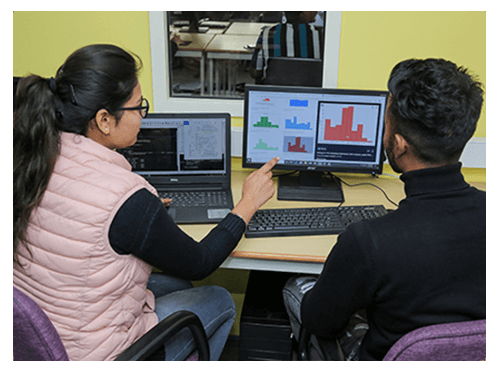
Through a balanced blend of theory and practical learning, students gain expertise in programming, database management, networking, and mathematical concepts such as linear algebra, probability, and discrete mathematics. The program prepares students to tackle real-world challenges in technology-driven industries.
PROGRAM HIGHLIGHTS
- Develop the ability to design and build efficient computer applications while identifying potential risks and delivering innovative solutions.
- Gain in-depth technical knowledge across diverse areas of computer applications in a learning environment that fosters career growth, entrepreneurship, and higher education.
- Acquire strong foundations in computer organization, networking, and software engineering principles.
- Learn modern technologies including web designing, big data, Python, and advanced Java programming.
- Enhance problem-solving skills using computational and analytical approaches.
- Build practical expertise through hands-on projects, lab work, and real-world case studies.
- Strengthen logical thinking and decision-making abilities for tackling complex IT challenges.
- Prepare for industry demands with a blend of theoretical knowledge and practical exposure.
CAREER OPPORTUNITY after B.Sc in Mathematics
A degree in B.Sc Mathematics opens doors to a wide range of careers in technology, research, finance, analytics, and education. Mathematics forms the backbone of many modern industries, and graduates with strong analytical and problem-solving skills are in high demand.
Mathematics graduates can pursue careers in sectors like banking, finance, data analytics, IT, research organizations, government services, and higher education. With the rise of data-driven decision-making, opportunities in statistics, machine learning, artificial intelligence, and actuarial sciences are expanding rapidly.
...